Demand forecasting
Forecasting delivery demand with foundation models and calibrating predictions through agentic systems that learn from feedback and observed outcomes.
Applied Scientist Amazon
“In other words, the brain is an inference machine that actively predicts and explains its sensations.”
I use generative models to forecast demand, personalize recommendations, and model variability in brain networks. My industry work spans model development, scalable implementation, and production deployment.
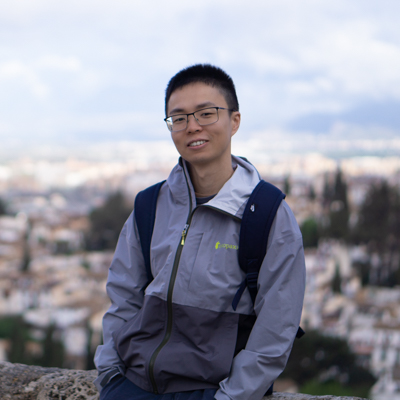
A little background
I’m an Applied Scientist at Amazon, building machine learning systems that improve how customers shop, pay, and receive their orders. My work spans recommender systems, demand forecasting, and AI agents, from research and experimentation to production deployment.
In Delivery Experience Optimization, I develop generative recommendation models and LLM agents that calibrate demand forecasts using statistical signals and business context. Previously, in Amazon Payments, I built systems for payment retry optimization and explored reinforcement learning for sequential marketing decisions and causal inference for evaluating payment offerings.
I earned my PhD in Industrial Engineering, specializing in Operations Research, from Purdue University in 2020. My research in network science and computational neuroscience focused on measuring variation across networks and modeling brain connectivity. I bring that foundation in statistical modeling and optimization to the design of practical, scalable ML systems.
Areas of focus
From everyday customer experiences to the dynamics of complex systems.
Forecasting delivery demand with foundation models and calibrating predictions through agentic systems that learn from feedback and observed outcomes.
Building generative recommenders that suggest relevant products eligible to ship with existing orders, increasing sales while improving delivery efficiency.
Modeling variability in brain connectivity across people, cognitive states, and time to understand brain dynamics through statistical measures and generative models.
Research in practice
Forecasting & agentic AI
I use Chronos-2 as a foundation model for demand forecasting, with cross-learning to draw on patterns shared across related time series. Context engineering is a central part of this work: dynamic-granularity batching controls how information is grouped and presented to the models, making context construction part of the forecasting design.
An agent layer built with Strands Agents SDK and AWS Bedrock brings these forecasts together with statistical signals and changing business context to propose forecast adjustments. This connects demand patterns learned by the foundation model with contextual information that can inform forecast calibration.
The system couples generative reasoning with a deterministic evaluation harness, which checks proposed adjustments against realized demand. That feedback drives programmatic optimization in DSPy, refining the agents’ reasoning and operating thresholds as demand outcomes become available.
Recommendation & delivery optimization
Delivery-aware recommendations need to account for product complementarity, personal preferences, and fulfillment constraints. I developed a generative retrieval model that uses an RQ-VAE to turn graph embeddings into semantic product IDs, then conditions a Transformer on user embeddings through soft prompts. Context dropout encourages the model to generate complementary suggestions.
To support real-time recommendations, I decoupled offline personalization from nearline delivery signals and implemented constrained decoding with a trie to enforce delivery eligibility. I evaluated relevance and diversity through backtesting, with a separate check at serving time to confirm that suggested products could ship with the existing order.
Network science
My work in network science examines a limitation of fitting generative models to individual observations: a model can reproduce one network yet miss the variation across a population. I developed statistical comparisons and entropy measures to evaluate that variation in observed and generated network collections, making population variability an explicit part of model assessment.
Alongside this evaluation work, I implemented generative network models using VAEs in PyTorch and analyzed the relationship between functional brain connectivity and behavior. Read the network variability study (opens in a new tab).
Writing & research
Published papers, internal research papers, and submitted manuscripts. Internal documents are not publicly available.
12th Amazon Consumer Science Conference (CSS 2026)
Amazon Science Archive
AMLC 2023 Workshop on AI/ML in Consumer & B2B Payments and Fintech
Network Science, 8(S1), S43–S64
Complex Networks & Their Applications VI, 1271–1283
Academic background
PhD in Industrial Engineering
West Lafayette, Indiana, USA
Advisor: Mario Ventresca GPA: 3.81/4.00
Bachelor of Management in Logistics Management
Tianjin, China
Advisor: Jinglei Yang GPA: 91.7/100
Get in touch
For research conversations and professional inquiries.